
Our Blog
Why You Shouldn't Skip Your Annual AC Service
Quick answer: Skipping your annual air conditioning service rarely causes an instant problem—it causes a slow, expensive one. Dirty filters, blocked drains, and undetected refrigerant leaks quietly reduce efficiency and build toward a breakdown. An annual check keeps your system running reliably, cheaply, and safely all year round.
There's a very reliable pattern we've noticed over three decades in the industry. Air conditioning systems are largely ignored until the moment they're desperately needed—usually the first genuinely hot week of the year, when you've got a houseful of guests or a packed office and nowhere to hide. That's when the phone rings.
The good news: most of those calls are entirely preventable. A straightforward annual air conditioning service catches the small issues before they become the kind of problems that spoil a heatwave or shut down a business for the day. In this post, we'll walk you through exactly what a service involves, what tends to go wrong when you skip one, and how to tell if your system is quietly crying for help.
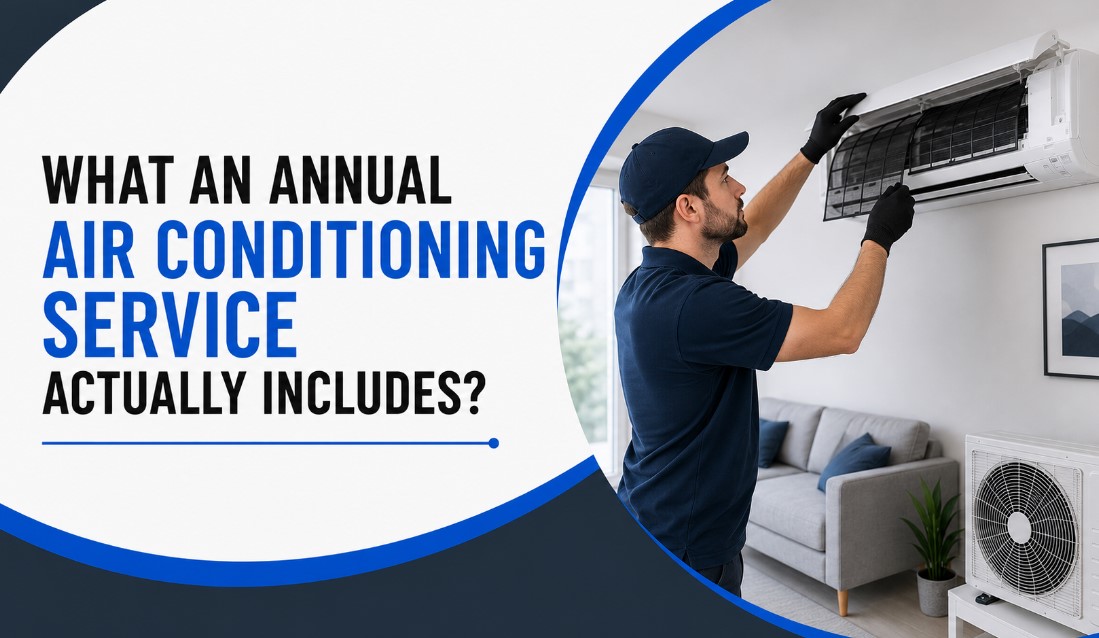
What an annual air conditioning service actually includes
A service isn't just an engineer turning up, poking around for 10 minutes, and calling it done. Here's what we look at properly.
Cleaning and airflow checks
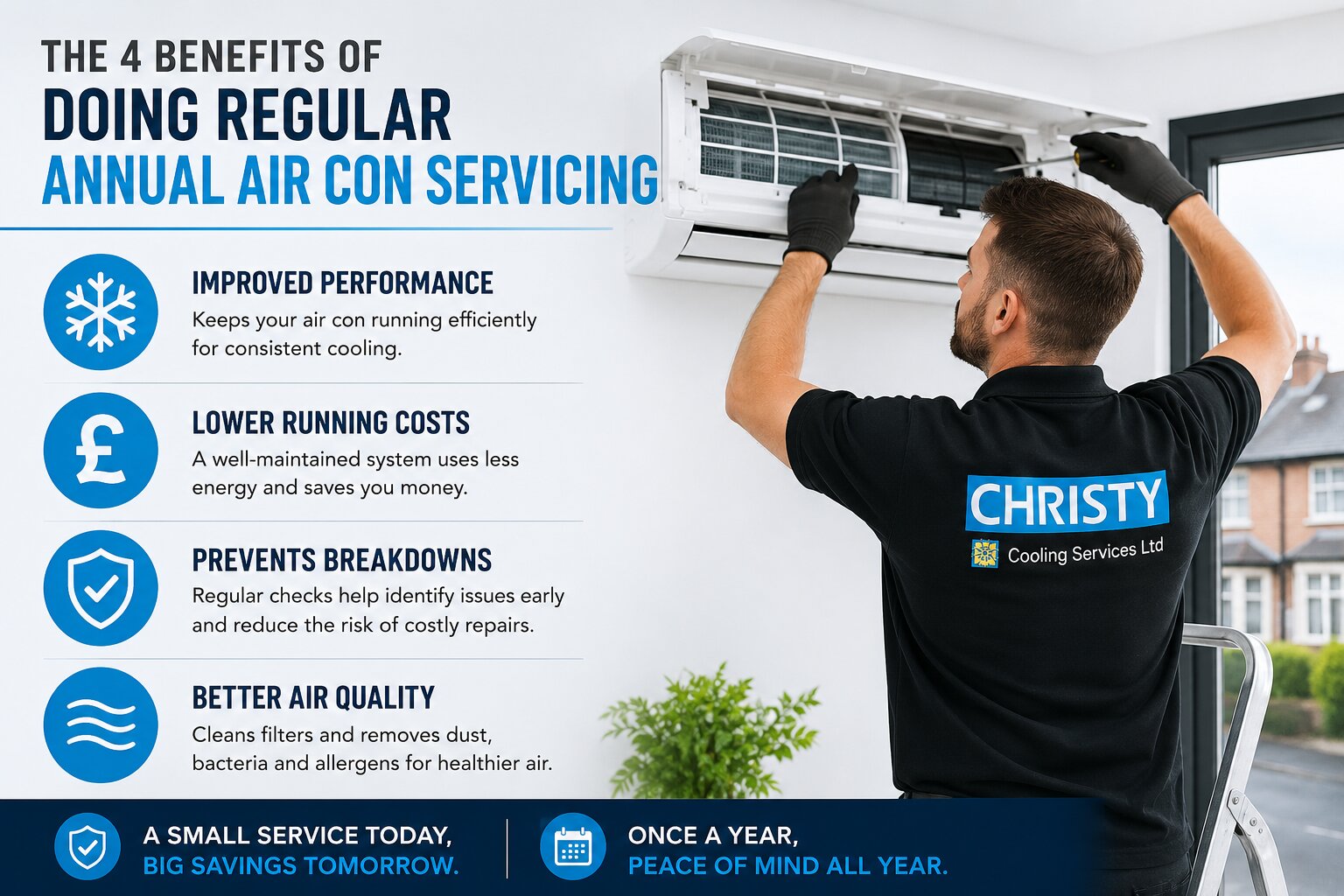
Replacing air filters is just part and parcel of owning an air conditioner. A clogged filter restricts airflow, makes the system less energy efficient, and—if left long enough—can cause ice build-up on the indoor unit. We clean or assess filters, check drainage systems for blockages, and make sure air can move freely through the unit the way it's supposed to.
Performance and efficiency checks
We test how the system is actually performing: how well it's cooling or heating, whether temperatures are consistent, and whether the unit is operating within expected parameters. A system that looks fine from the outside can still be working far harder than it should.
Electrical and safety checks
Loose electrical connections, worn components, and control issues are all things that can sit undetected until they cause a fault. Electrical checks are a routine but important part of any air con service—they're not glamorous, but they matter.
Refrigerant considerations
Refrigerant handling is a regulated area in the UK, and for good reason. Our engineers hold City & Guilds 2079 F-Gas qualifications, and Christy Cooling Services carries full REFCOM F-Gas company certification. If there's a suspected refrigerant leak, we identify it, report it, and handle it compliantly—not just top it up and hope for the best.
The real cost of skipping your air con service
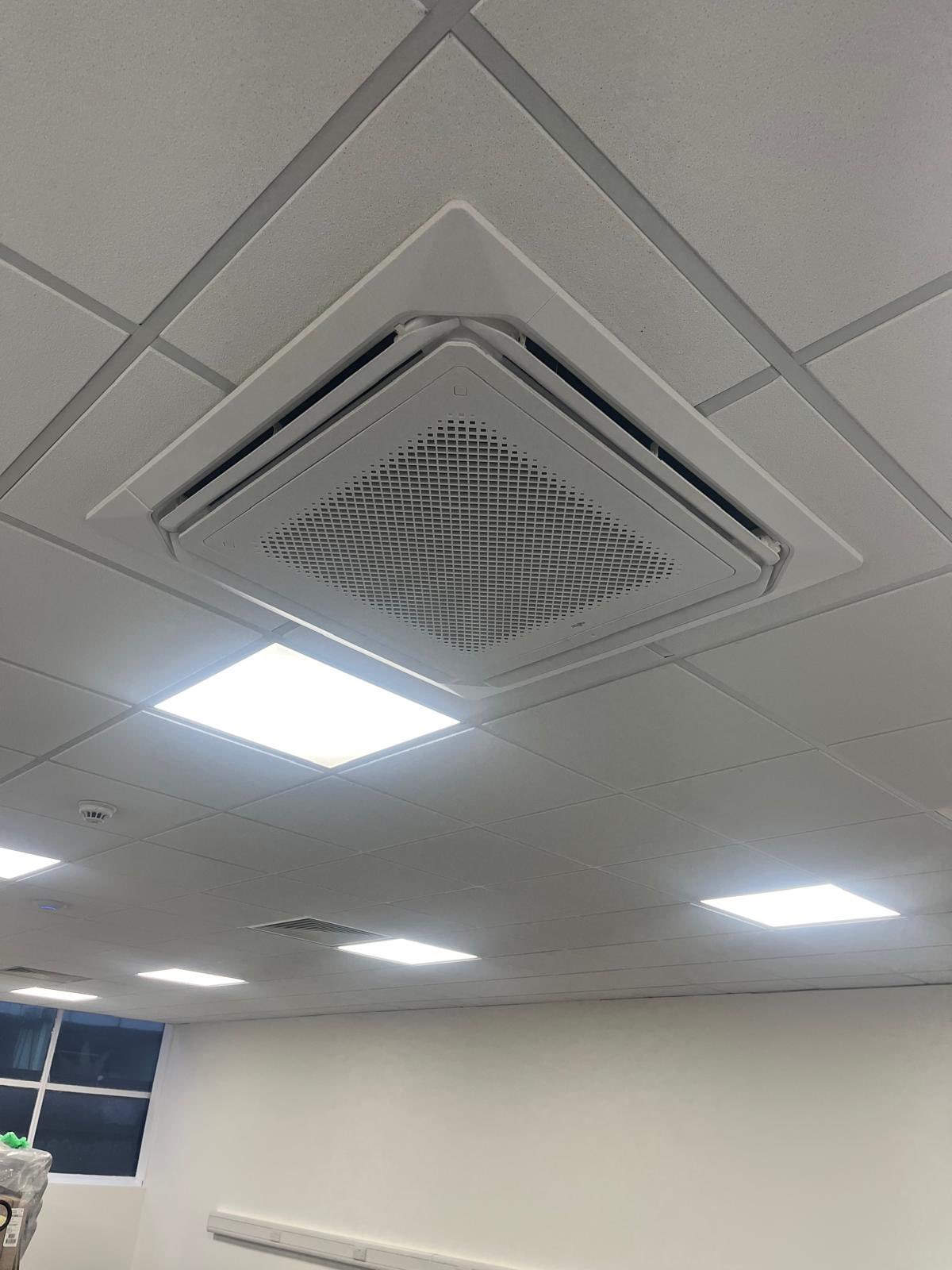
The logic of skipping a service is understandable: "It's still cooling fine, so why spend money on it?" The problem is that efficiency doesn't fall off a cliff—it erodes gradually, in ways you might not notice until the bill arrives.
Dirty coils and clogged filters make the compressor work harder to achieve the same result. That extra effort shows up in your electricity usage. Over a summer of daily use, the difference adds up. And while a service has a predictable cost, an emergency call-out when something fails mid-July very much doesn't.
Compressors and fans that run under strain also age faster. Replacing a compressor is a significantly bigger job than cleaning a condenser coil. For businesses, there's the additional cost of downtime—uncomfortable staff, unhappy customers, and potentially lost trading time if the system is essential to operations.
What happens when you skip AC servicing: the usual suspects
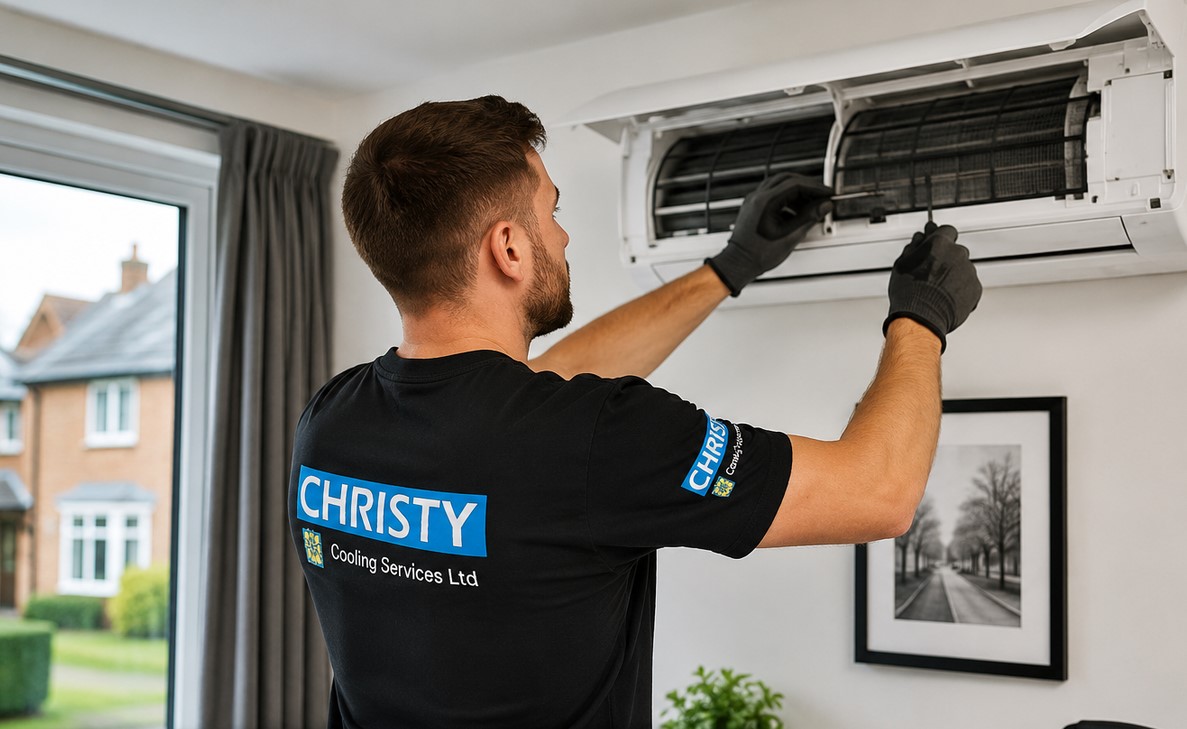
Your energy bills creep up (and you blame the weather)
A system that's working twice as hard to push air through a blocked air filter is consuming more energy than it needs to. Most people attribute rising bills to general energy costs. Often, an unmaintained AC unit is a quiet contributor to energy efficiency dropping and bills rising.
Weak airflow and uneven temperatures from your air conditioning unit
One room that's fine, one that's stifling—sound familiar? Restricted airflow, dirty coils, and low refrigerant can all create inconsistency. It's one of the most common complaints we hear from people who've put off regular servicing.
Strange smells and indoor air quality issues
A musty smell coming from an air conditioning unit is almost always a hygiene issue. Bacteria, mould, and dust accumulate in filters and drain pans, and the system then circulates that air through your home or workspace. Not ideal at the best of times; genuinely unpleasant during allergy season.
Water leaks and blocked condensate drains
Condensate drains can block with algae and debris. When they do, the water has to go somewhere—usually somewhere you'd rather it didn't. We've seen water leaks cause ceiling damage and flooring issues that cost far more to fix than a routine drain clean would have.
Noisy air conditioner operation and vibration
Rattling, humming, or unusual vibration is your system's way of telling you something's loose, worn, or struggling. Ignoring those sounds tends to turn a minor fix into a more expensive one.
Sudden failure at the worst possible moment
This one almost writes itself. In our experience, AC systems rarely fail on mild overcast days in October. They fail during the hottest week of the year, when demand for engineer availability is at its highest and your options are most limited.
Warning signs your AC unit is overdue a service
Keep an eye out for any of the following:
Takes noticeably longer to cool or heat a room
Ice forming on pipework or the indoor unit
Dripping or water pooling around the unit
Musty or dusty smell when the system runs
Rattling, buzzing, or grinding noises
Remote control or controller behaving erratically
System cycling on and off more frequently than usual
If any of these sound familiar, it's worth getting in touch before a minor issue becomes a full breakdown.
How often should air conditioning be serviced in the UK?
For most domestic systems, an annual air conditioning service is a sensible baseline. Heavily used systems—offices, server rooms, salons, retail environments, or anywhere the unit runs for long hours—often benefit from more frequent attention.
As part of any air conditioning service UK customers request, we'll give you an honest assessment of how often your specific system should be checked based on how it's used and its age. There's no one-size-fits-all answer, and we'd rather give you an accurate recommendation than an automatic upsell.
Can I do anything myself between services?
Yes—within sensible limits. Here are a few things that genuinely help:
Clean accessible filters if your unit has user-serviceable ones (check your manual)
Keep the outdoor unit clear of leaves, plant growth, and debris
Don't block indoor vents with furniture or curtains
Use sensible temperature settings—there's no benefit to running the system at maximum all day
Report changes early—unusual sounds, smells, or performance drops are worth a quick call before they escalate
That said, anything involving refrigerant, electrical components, or drainage work should be left to a qualified engineer. If in doubt, we're happy to advise.
Why professional air conditioning maintenance matters—and why qualifications count
Not all AC maintenance UK providers are equal, and this is an area where credentials genuinely matter. F-Gas regulations exist for environmental and safety reasons, and only certified engineers are legally permitted to handle refrigerants.
Our engineers are City & Guilds 2079 qualified, and Christy Cooling Services holds REFCOM F-Gas full company certification. We're also accredited with SafeContractor, CHAS, Constructionline, and ISO9001:2008—not because they look good on a website, but because they reflect the standard our work is held to. We carry experience across a wide range of equipment makes, which means we're not guessing when we open up a system we haven't seen before.
Annual servicing for homes vs businesses: what's different?
For homeowners, the priorities are comfort, reliability, reasonable running costs, and air quality. A breakdown is inconvenient. Mould circulating through the bedroom is a health concern.
For businesses, the stakes are often higher. Commercial air conditioning failure can affect staff productivity, customer experience, and in some cases—food retail, healthcare, or temperature-sensitive storage—operational compliance. Preventative maintenance means planned costs rather than surprise ones, and planned is always better.
We cover domestic and commercial customers across Essex, London, and the surrounding areas, and we're used to tailoring our servicing schedules to fit around business hours and operational requirements.
Frequently asked questions
How much does an annual air conditioning service cost in the UK?
The cost depends on the type of system, number of units and access requirements. The best way to get an accurate figure is to call us for a free, no-obligation quote.
How long does an air con service take?
For a straightforward domestic system, typically one to two hours. Commercial systems with multiple units will take longer. We'll give you a realistic time estimate before we visit.
Is an annual service really necessary if the system still cools?
Cooling doesn't have to fail completely for a system to be underperforming or building toward a more serious fault. Many of the issues that lead to breakdowns are invisible until a qualified engineer checks for them.
Will servicing reduce my electricity bill?
A clean, well-maintained system runs more efficiently than a dirty, strained one. We won't promise a specific percentage saving, but removing the causes of inefficiency—blocked filters, dirty coils, low refrigerant—generally has a positive effect on running costs.
What happens if my AC is low on refrigerant?
Low refrigerant usually indicates a leak rather than natural depletion. It needs to be identified, fixed, and recharged by an F-Gas certified engineer. Topping up without fixing the source just delays the same problem.
Can a dirty filter damage my air conditioner?
Yes. Restricted airflow causes the system to overwork, can lead to ice forming on the evaporator coil, and puts strain on the compressor over time. Regular filter maintenance is one of the simplest ways to protect your system.
Do you provide air conditioning servicing and air con maintenance in Essex and London?
Yes. We cover Essex, London, and the surrounding areas for both domestic and commercial customers.
Do your engineers hold F-Gas qualifications?
All our engineers hold City & Guilds 2079 F-Gas qualifications. Christy Cooling Services also holds REFCOM F-Gas full company certification for refrigerant handling.
Should commercial air conditioning be serviced more than once a year?
For high-usage environments—offices running full days, retail spaces, hospitality, server rooms—twice-yearly servicing is often more appropriate. We'll recommend a schedule based on your system and how it's used.
Book your service before the system tells you to
A skipped service rarely causes an immediate failure. What it does is build the conditions for one—quietly, gradually, and usually at the most inconvenient possible time.
At Christy Cooling Services, we've been carrying out air conditioning servicing, maintenance, and repairs across Essex, London, and the surrounding areas for over 30 years. Our qualified engineers work across domestic and commercial systems, and we bring the same standards to a single-unit home installation as we do to a multi-unit commercial site.
Give us a call for expert advice and a free quote. We're straightforward to talk to, and we'd rather help you avoid a problem than fix one that didn't need to happen.

Get In Touch
If you need air conditioning installation, repairs or practical advice, get in touch with Christy Cooling Services. We’re happy to talk through your options, visit the property and recommend a system that suits the space properly.
With years of hands-on experience, Christy Cooling Services provides reliable, energy-efficient air conditioning installations and repairs tailored to homes and businesses across Essex, Kent and Cambridge.

Menu
Services
Address
HEAD OFFICE
Temple Wood Estate Stock Road
Chelmsford Essex CM2 8LP
© 2026. Christy Cooling Services LTD . All Rights Reserved | Acceptable Use Policy | Cookie Policy | Gdpr Regulations | Privacy Policy | Regulations | Terms Of Use