
Our Blog
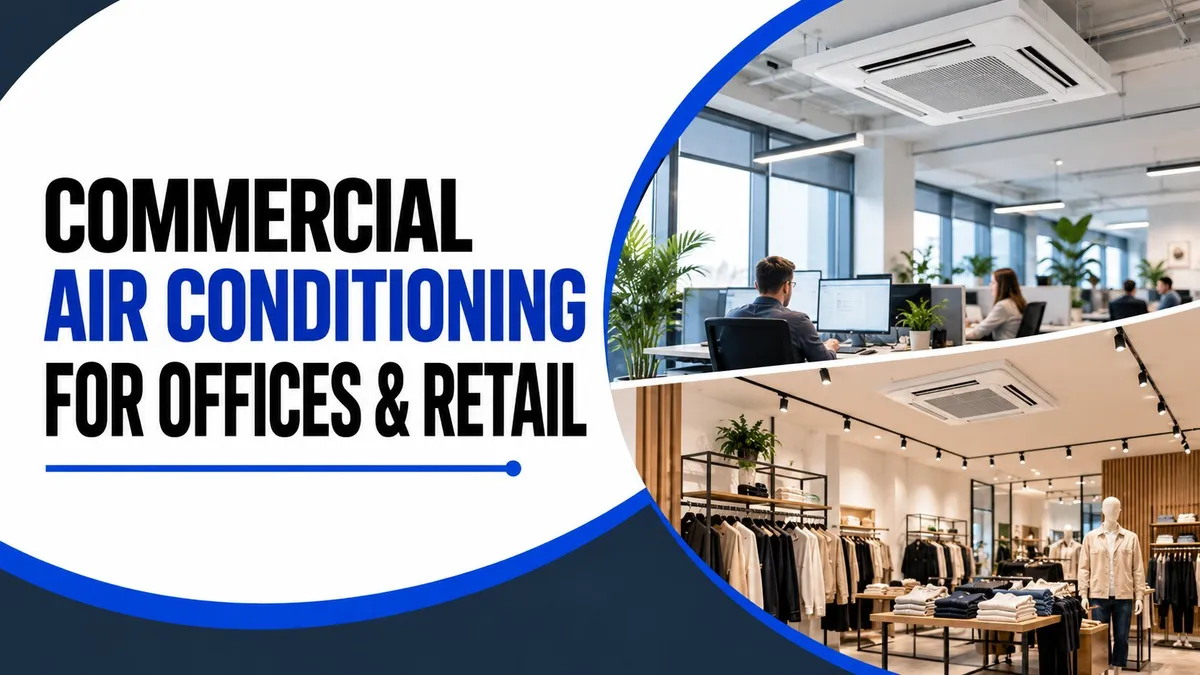
Commercial Air Conditioning for Offices & Retail | UK Guide
There's a particular kind of misery reserved for British offices during a hot September: sweaty meeting rooms, oscillating desk fans doing absolutely nothing, and someone inevitably propping the fire door open "just for a bit of air." Retailers know a different version of the same problem—customers walking straight back out of a shop that feels like a greenhouse, staff wilting behind the till, stock quietly suffering in the heat.
We've spent years designing and installing commercial air conditioning across Essex, Kent and Cambridge, and if there's one thing we've learned, it's that there's no single "best" system. What works brilliantly in an open-plan office might be completely wrong for a boutique with a low ceiling and a shop window that catches the afternoon sun.
This guide walks through what actually matters when choosing commercial air conditioning for an office or retail space: the system types, the sizing, the running costs, the installation process, and the maintenance that keeps everything ticking along nicely. We'll also flag the mistakes we see businesses make time and again, so you can skip straight past them.
Why commercial air conditioning matters (beyond "it's a bit warm")
It's easy to think of air conditioning as a nice-to-have. It isn't, really.

Staff who are too hot or too cold don't work as well—that's not opinion, it's just how people function. Customers make quicker decisions to leave (or stay) in retail spaces based on comfort, often without even realising why. Servers, EPOS systems and stockrooms full of temperature-sensitive goods don't care about employee morale, but they do care about heat, and equipment failures caused by overheating are entirely avoidable.
Good commercial air conditioning also does more than cool. Most modern systems act as heat pumps, meaning they heat just as effectively as they cool, so you're not running two separate systems for two separate seasons.
Office air conditioning vs retail air conditioning: what changes
The physics is the same, but the priorities aren't.
In offices, the things worth thinking about include:
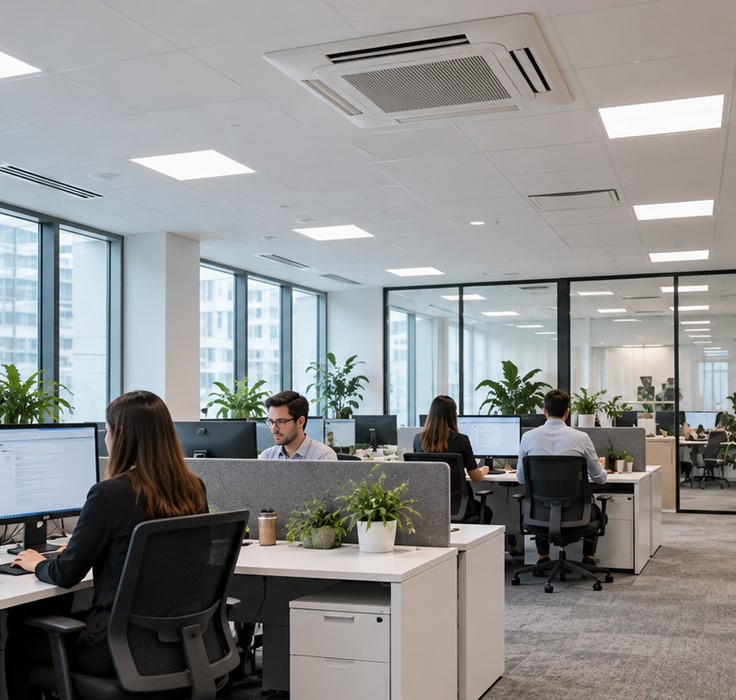
Meeting rooms that go from empty to eight people and three laptops within minutes
Open-plan zoning, so the sales team by the window isn't roasting while finance in the corner reaches for a jumper
Noise—nobody wants a unit humming through every phone call
Scheduling, so the system isn't running full blast over an empty building at 7pm
In retail, the picture looks different:

Heat gain from lighting, refrigeration units and constant footfall adds up fast
Doors opening every few seconds lets conditioned air straight back out again
Back-of-house storage often needs a different approach to the shop floor
Indoor units need to be discreet enough not to clash with the shopfit
Neither type of space is more complicated than the other—they're just complicated in different ways.
Types of commercial air conditioning explained
There isn't a "one size fits all" answer here, but the main options break down like this.
Wall mounted units
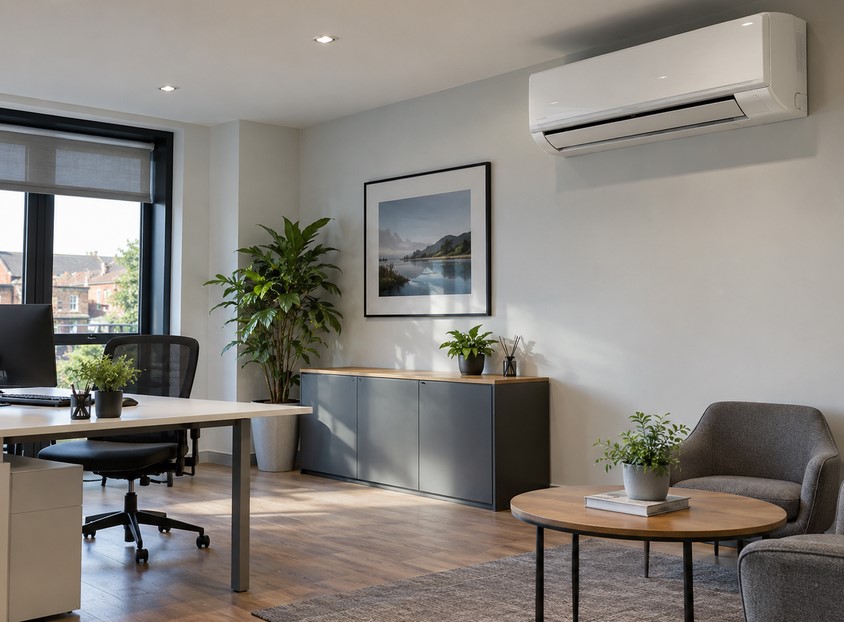
The classic option, and for good reason. Wall mounted units are quick to install, relatively unobtrusive, and work well in smaller offices, treatment rooms, back offices and compact retail units. Modern versions are far quieter than people expect, which helps in spaces where a droning unit would be genuinely distracting.
Ceiling mounted (cassette) systems
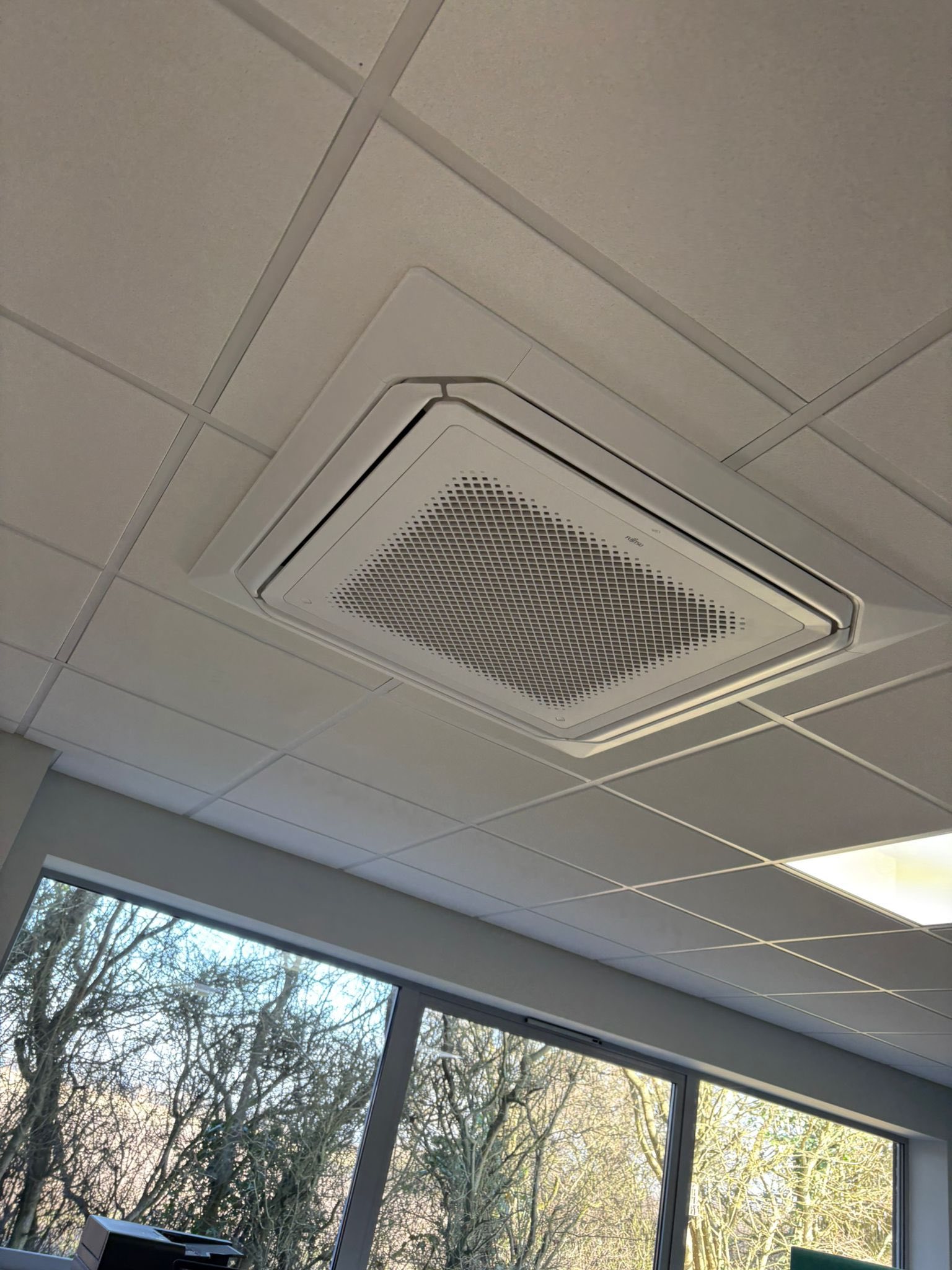
These sit within or just below the ceiling and spread air more evenly across a room, which makes them a strong choice for open-plan offices and retail floors where wall space is limited or already full of shelving. They're also less visually dominant than a wall unit, which matters in customer-facing spaces.
Multi-split systems
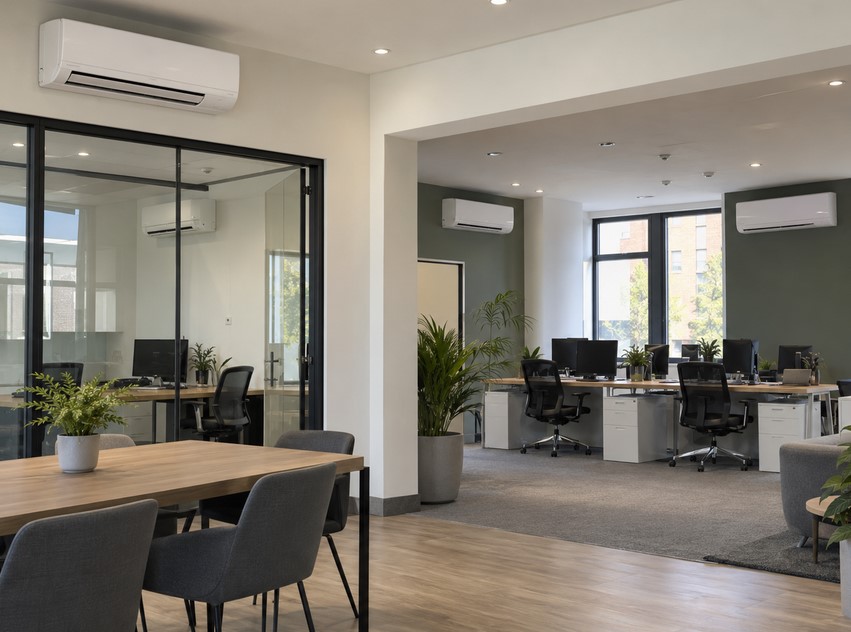
If you've got several rooms that each need their own temperature control—say, a multi-room office or a retail unit with a distinct back-of-house area—a multi-split system connects several indoor units to a single outdoor unit. That means independent room control without cluttering the outside of the building with multiple condensers.
Ducted air conditioning
The most discreet option by far. Ducted systems hide the main unit in a ceiling void or loft space, delivering air through vents rather than a visible box on the wall or ceiling. This is often the preferred choice for larger offices, premium retail fit-outs, or refurbishment projects where appearance is genuinely part of the brief. It does need proper ceiling void space and careful design, but the finish is hard to beat.
Getting the sizing right
This is where a lot of installations go wrong, and it's rarely obvious until months later.
Sizing a system properly means factoring in floor area, glazing, occupancy levels, equipment heat output, lighting, and even which direction the building faces. Get it wrong in either direction and you'll feel it:
Oversized systems cool the room too quickly, then switch off—known as short cycling—which leads to poor humidity control, higher wear, and surprisingly, less comfort.
Undersized systems simply can't keep up during peak heat, leaving you with uncomfortable spikes and a stream of complaints from staff or customers.
When we survey a property, we're looking at all of this properly rather than guessing based on room size alone. It's the difference between a system that quietly does its job for years and one that becomes a constant source of frustration.
Energy efficiency and running costs
Because most commercial systems now double as heat pumps, you get heating and cooling from one piece of equipment rather than running a separate heating system through winter. Beyond that, a few practical things genuinely affect running costs:
Sensible setpoints (every degree lower in summer or higher in winter adds to the bill)
Zoning and scheduling, so you're not conditioning an empty building overnight
Clean filters and general upkeep, since a clogged system has to work harder for the same result
Managing solar gain with blinds, and in retail, being mindful of how much cool air escapes every time the door opens
None of this requires expensive tech—it's mostly about using what you've already got sensibly.
Office AC installation in the UK: what to expect
A proper installation starts with a site survey, not a quote pulled together from a floor plan. We look at pipe routing, unit positioning, and how the system will actually sit within the building, because those early decisions affect both the finished look and the day-to-day performance.
Disruption is usually far less than people expect, especially when work can be phased or carried out outside normal hours for busy retail units. Compliance matters too: refrigerant handling should only ever be carried out by qualified engineers, and any installer you use should hold proper F-Gas qualifications rather than treating air conditioning as an add-on to another trade.
Once the system's in, a proper handover includes commissioning, a rundown of how to use the controls, and clarity on what's covered under warranty.
Maintenance and aftercare: the bit everyone forgets
Nobody thinks about their air conditioning until it stops working on the hottest day of the year—and by then, it's usually too late to avoid a bit of disruption.
Regular maintenance typically covers filter checks, component inspection, airflow testing, drainage checks and an overall performance review. It protects your warranty, catches small issues before they become expensive ones, and keeps the system running efficiently rather than straining to make up for a blocked filter.
Watch out for warning signs between services: unusual noise, odd smells, weaker airflow than usual, visible leaks, or a unit that keeps tripping the electrics. Any of those are worth a call before they turn into a bigger repair.
Common mistakes businesses make
We see the same handful of issues crop up again and again:
Choosing the cheapest quote rather than the best-designed solution—these aren't always the same thing
Poor unit placement, like a wall unit blasting directly onto a desk, or missing the warmest corner of a shop entirely
Ignoring noise levels, especially in customer-facing spaces or quiet offices
Overlooking condensate drainage, which causes problems long after installation
Skipping maintenance altogether, which is a bit like never servicing a car and being surprised when it breaks down
Most of these are avoidable with a proper survey and a bit of forward planning, rather than fixing them after the fact.
Frequently asked questions
What's the best type of commercial air conditioning for an office?
It depends on the layout, but ceiling cassette or multi-split systems suit most open-plan offices well, while wall mounted units are often enough for smaller spaces or individual rooms.
What's the best solution for retail air conditioning when doors are opening all day?
Ceiling mounted or ducted systems tend to cope better with constant door traffic, since they distribute air more evenly across the space rather than relying on a single point.
How disruptive is office AC installation in the UK?
Less than most people expect. A well-planned installation can often be phased or scheduled outside working hours to minimise disruption to staff or customers.
Can air conditioning provide heating as well as cooling?
Yes—most modern commercial systems function as heat pumps, so they handle both jobs throughout the year.
How often should commercial air conditioning be serviced?
This varies depending on system type and usage, but regular servicing is strongly recommended to maintain efficiency and reduce the risk of unexpected faults.
Do I need an F-Gas certified installer?
Yes. Refrigerant handling should only be carried out by qualified engineers, and any reputable commercial installer should hold F-Gas qualifications and certification.
Is ducted air conditioning worth it for offices or retail?
If appearance matters and you've got suitable ceiling void space, ducted systems offer the most discreet finish and work well for larger or higher-spec spaces.
Can one outdoor unit run multiple indoor units?
Yes—that's exactly what a multi-split system does, giving you independent control over several rooms without cluttering the outside of the building.
How do I know what size system I need?
A proper survey looking at floor area, glazing, occupancy and equipment heat output is the only reliable way to get this right—guesswork tends to cause problems later.
Do you cover Essex, Kent and Cambridge?
Yes, we work across all three areas and the towns in between, handling everything from single-room installations to larger commercial projects.
Ready to sort your office or retail air conditioning?
If you're weighing up options for a commercial space and want advice that's actually based on your building rather than a generic recommendation, we're happy to help. We'll take a proper look at the property, talk you through what makes sense, and install it to a standard that's built to last—no hard sell, just straightforward advice from engineers who've been doing this for years.
Call us or get in touch here to arrange a survey.

Get In Touch
If you need air conditioning installation, repairs or practical advice, get in touch with Christy Cooling Services. We’re happy to talk through your options, visit the property and recommend a system that suits the space properly.
With years of hands-on experience, Christy Cooling Services provides reliable, energy-efficient air conditioning installations and repairs tailored to homes and businesses across Essex, Kent and Cambridge.

Menu
Services
Address
HEAD OFFICE
Temple Wood Estate Stock Road
Chelmsford Essex CM2 8LP
© 2026. Christy Cooling Services LTD . All Rights Reserved | Acceptable Use Policy | Cookie Policy | Gdpr Regulations | Privacy Policy | Regulations | Terms Of Use